

published 2016 – fathers magazine
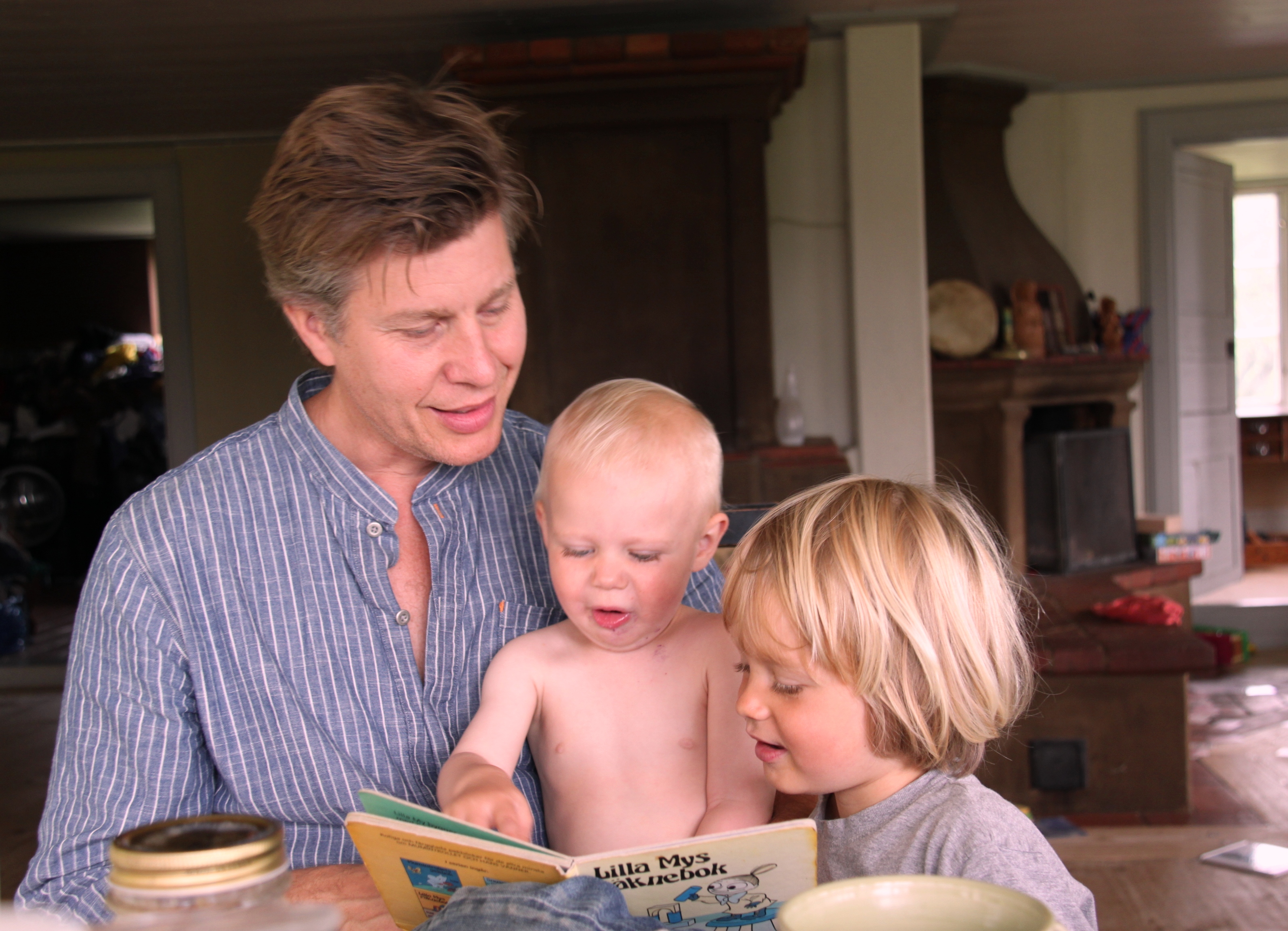
How can I be present as a father? What do I want to pass on? These questions took a former journalist on a journey of healing and inner exploration. He found his answers by turning back to nature. Living on a farm on the west coast of Sweden with his wife and two boys, he now shares his intentions with other fathers in his community, Natural Dads.
Being a father should be such a natural thing – how did it become so complicated?
For us fathers, especially in our culture, it is hard to let go of all that conditioning of the industrial world. For hundreds of years, men were taught to ignore their feelings, trained to value competition and conquest, and to measure their self-worth by how they perform, what they earn and what they do for a living. That’s spiritually deadening. To be present with our children is a conscious choice. So part of the answer is to let go of some of our ambitions and unschool ourselves from all the habits and patterns our culture imposes on us.
How did you step out of this circle?
I was 36 or 37 years old, working too hard as a journalist, and one day I just couldn’t do it anymore. I was burned out. About the same time, my sister and later my father died. I also lost most of my savings due to a bad investment. It just shocked my whole system and I asked myself: What is there in my life that cannot be taken away from me? Before I met my wife, I created a vision for my life: who I wanted to be, where I wanted to live and whom I wanted to be with.
I had a deep need to belong. Until the age of eight or nine, I had this one place in the countryside in southern Sweden where I felt really at home. That is where I learned about grace, peace and belonging. So I turned back to nature.
My wife and I bought this farm to hold workshops on nature awareness and permaculture. We don’t do that anymore, but every day I have the opportunity to explore and be present with my children. Since we moved here ten years ago, our aim has been to maximize diversity using the principles of permaculture. Year by year we’re creating an environment that’s rich, vibrant and healthy. I feel very privileged to live here with my family.
The relationship between a father and son is said to be a very special one. How do you experience that with your boys?
Quentin, my youngest, is very much like I was as a kid. Like any parent, I get impatient, frustrated or sometimes angry. When that happens, I unconsciously repress what he is expressing. A son triggers a father in ways that are different from daughters. He takes you to places deep in your unconsciousness where you were wounded as a child. You either choose to heal these places or you act out in unconscious ways, asserting authority and power over the small child. This is a form of violence, and it passes on ancestral patterns that are most likely repressive and hurtful.
The task of the father, as I see it, is to be conscious about what I want to pass on. It’s about taking responsibility for my ancestral line and my legacy. I have to acknowledge that I need help, support, guidance and advice from people I trust. It’s a part of fathering.
Did this acknowledgment lead to the idea for Natural Dads?
Through Natural Dads, I support fathers in becoming more present with their children. You can be physically present, but emotionally absent. Or you’re just not available, because work is so demanding that when you get home you’re too tired to father wholeheartedly. This is expressed as impatience, anger, depression or a sense of powerlessness. The child suffers from this in many ways, and there’s an impact on their emotional and physical development. As a coach and guide, I work with fathers around the world to find a greater balance in their lives.
 Annika KiehN